Category: Fuselage

  • Fuselage disassembly

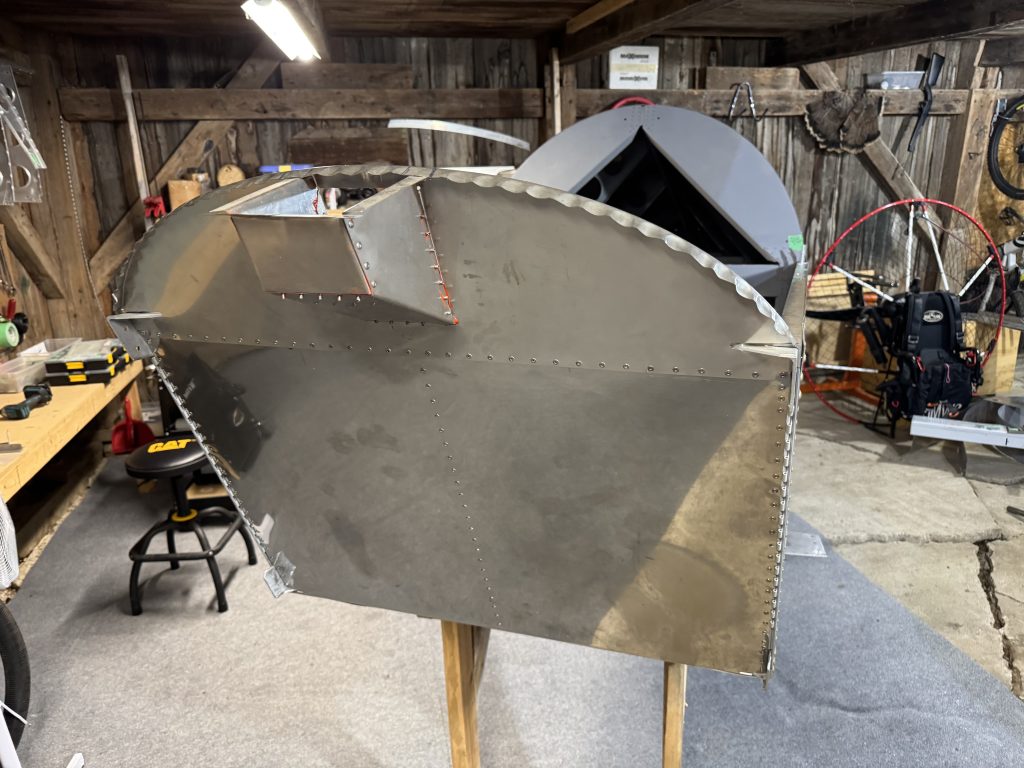
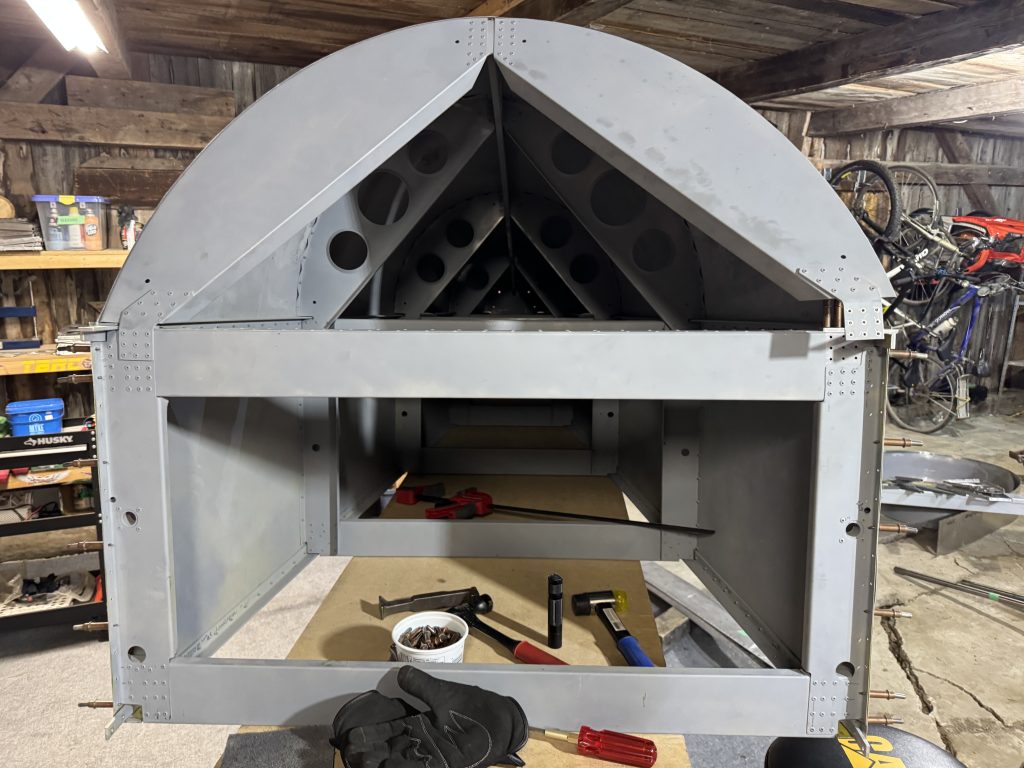
    To fix the incorrect assembly of the side skins, to get at the poorly pulled rivet in the cross box, and to redo a few things in the front fuselage, the front of the fuselage had to be separated from the rear. It was not fully attached but as some of the rivets were poorly done they were a lot harder to remove.
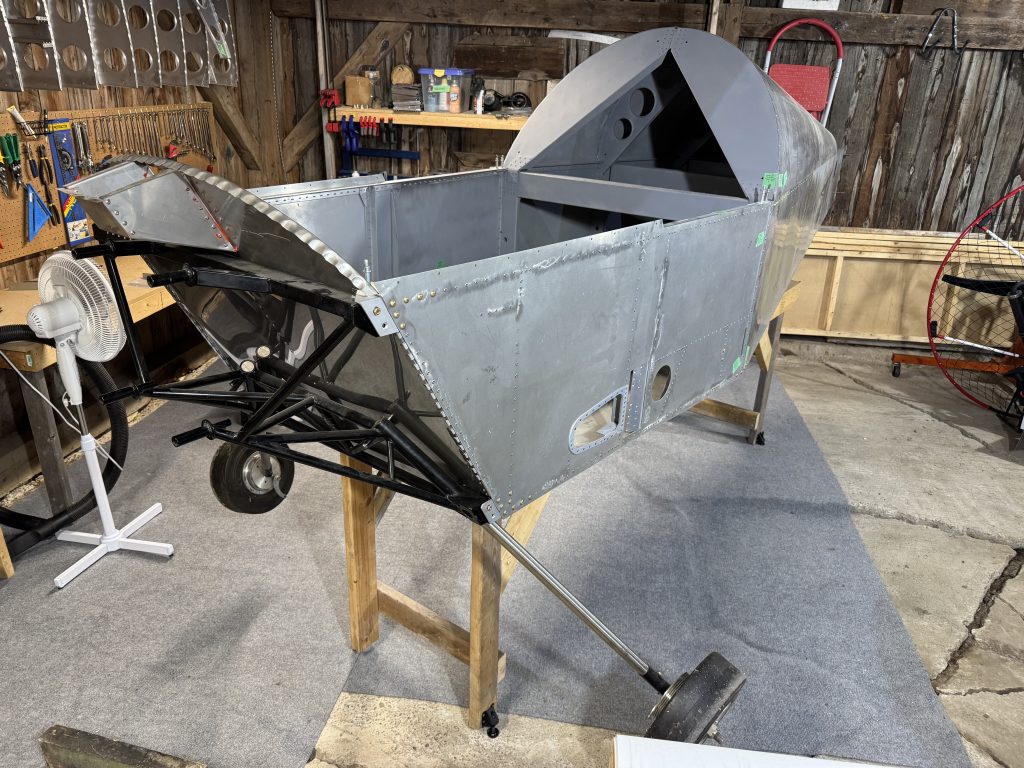
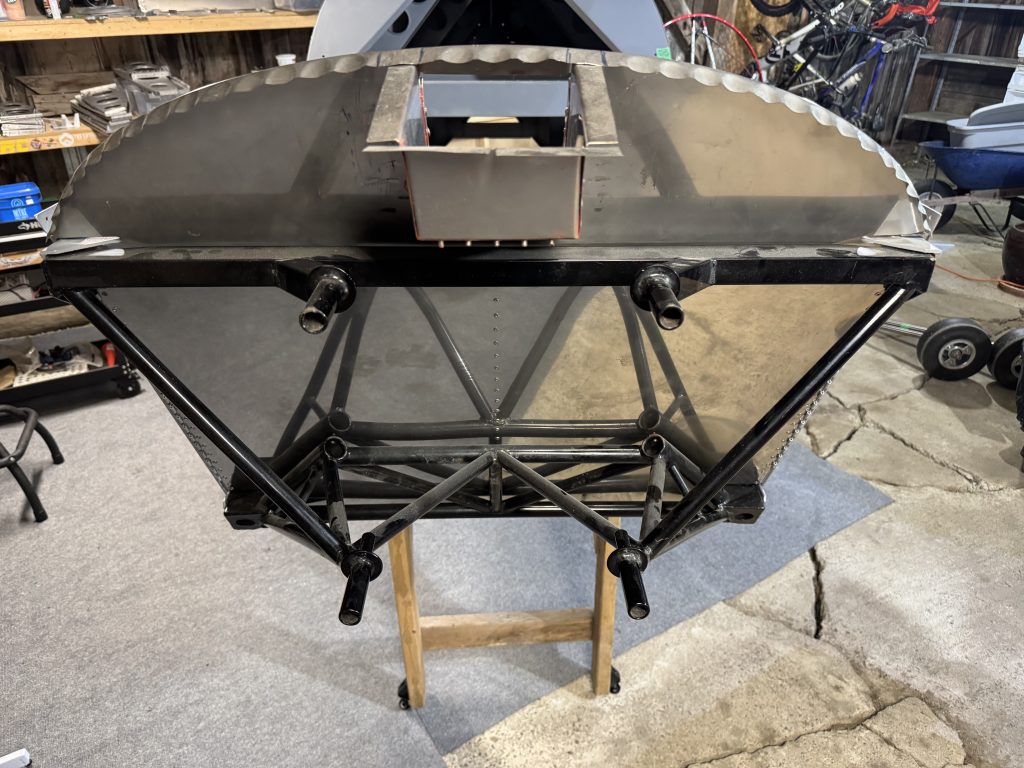
    First, get the fuselage up on a worktable. I managed to do this by myself.
    Then remove the landing gear, which is held on with a single bolt and friction fit.
    Then the motor mount which was just pinned in place.
    then drill out a bunch of rivets and undo a few bolts. Hey presto.
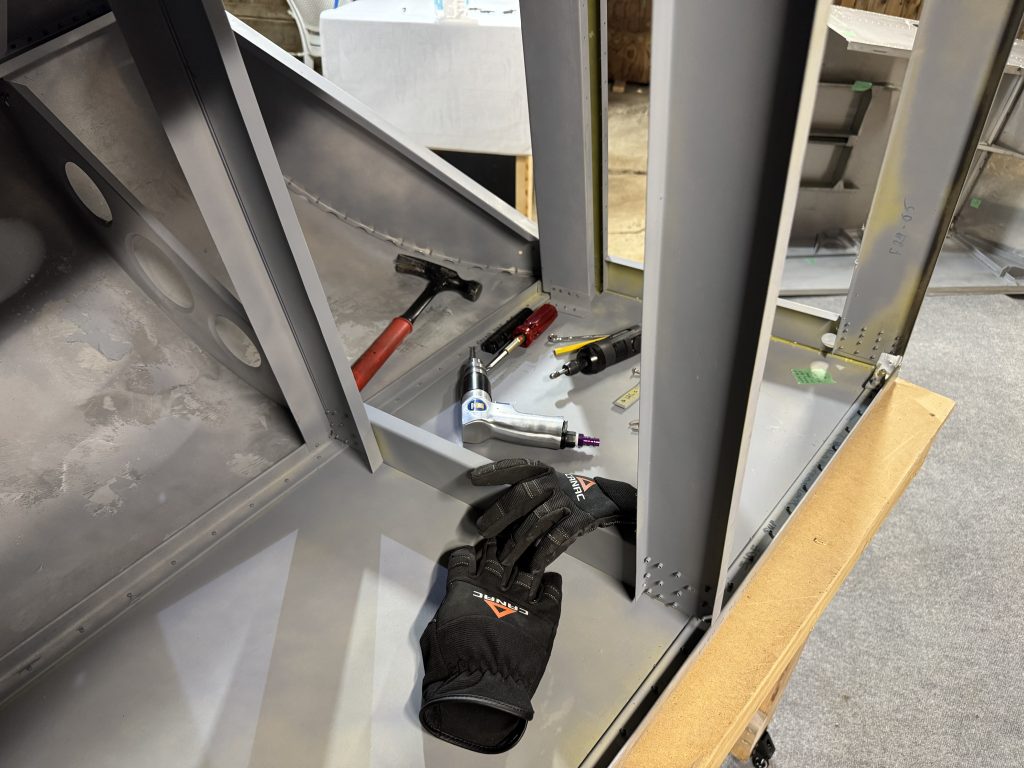
    I had to take a lot more stuff apart than I expected.
    but I’m getting good at removing rivets.
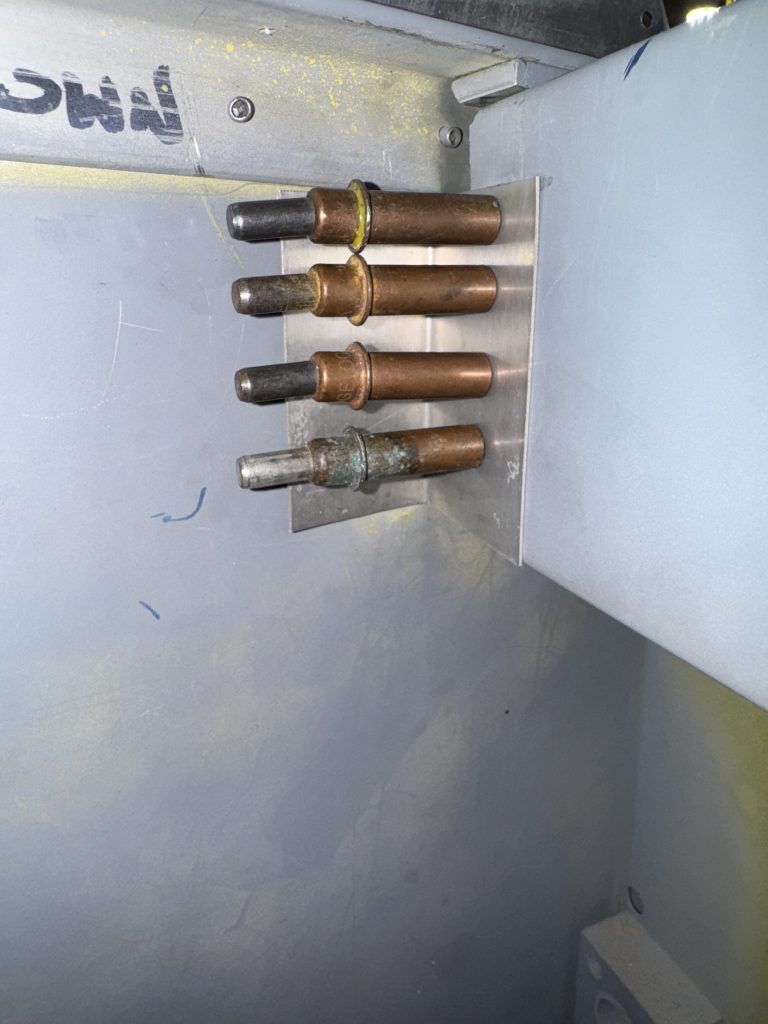
    Finally, the culprit has been extracted.
    And, the new rivet correctly pulled.
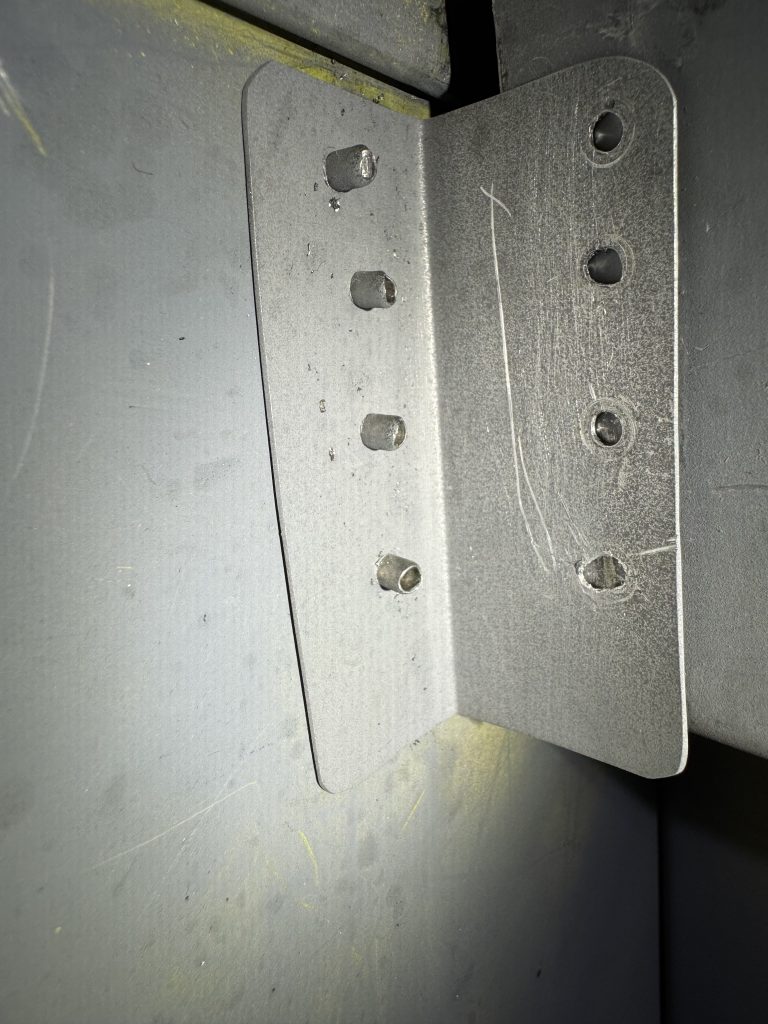
    The reason the rivet mushroomed in the wrong place was the cross-box was spaced too far away from the longeron due to this clip being installed before the cross-box was spaced. I will remake this simple clip with the new alignment, although I am not sure how I will drill the rivet holes from inside the cross-box…

    I am about 6-8 hours into this repair so far and there is still plenty left to do. Apparently this is what I wanted in a project. It does feel good to see the end result of the repair. However I still have to be very careful when undoing work as it’s easy to damage components, and they can be time-consuming and expensive to replace.

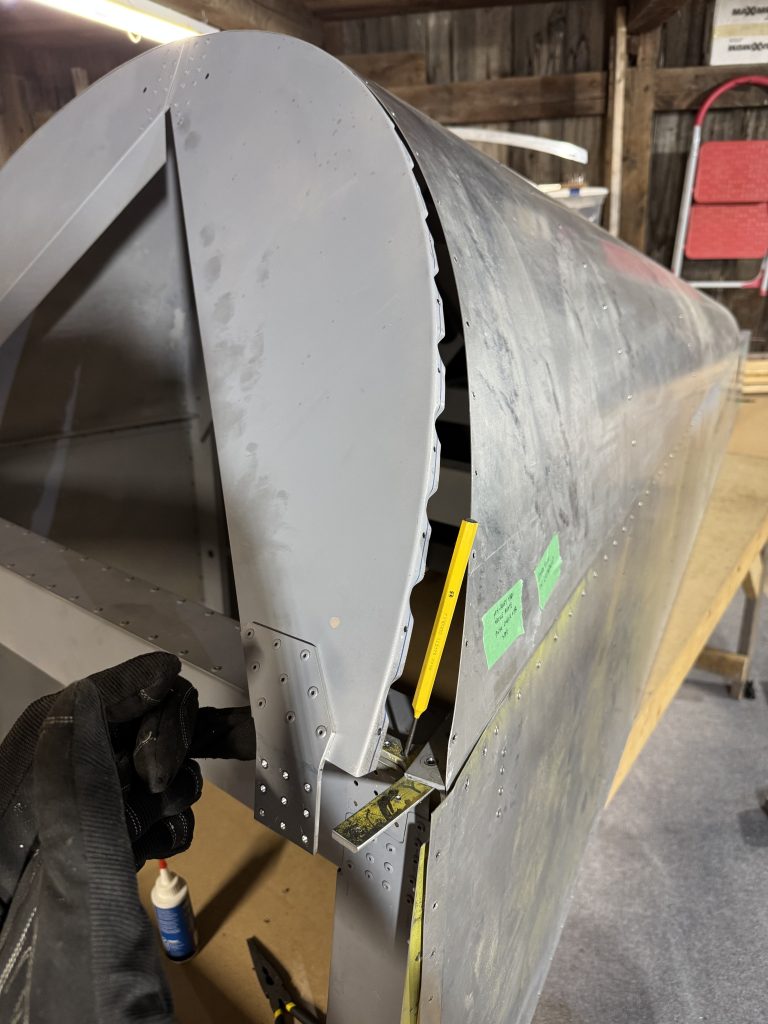
    To redo the clip for the cross-box, I first tried marking or spraying paint from the inside to the outside, to mark the holes so I could drill them. This didn’t work as the inside of the box is too tight, so I had to think of something else.
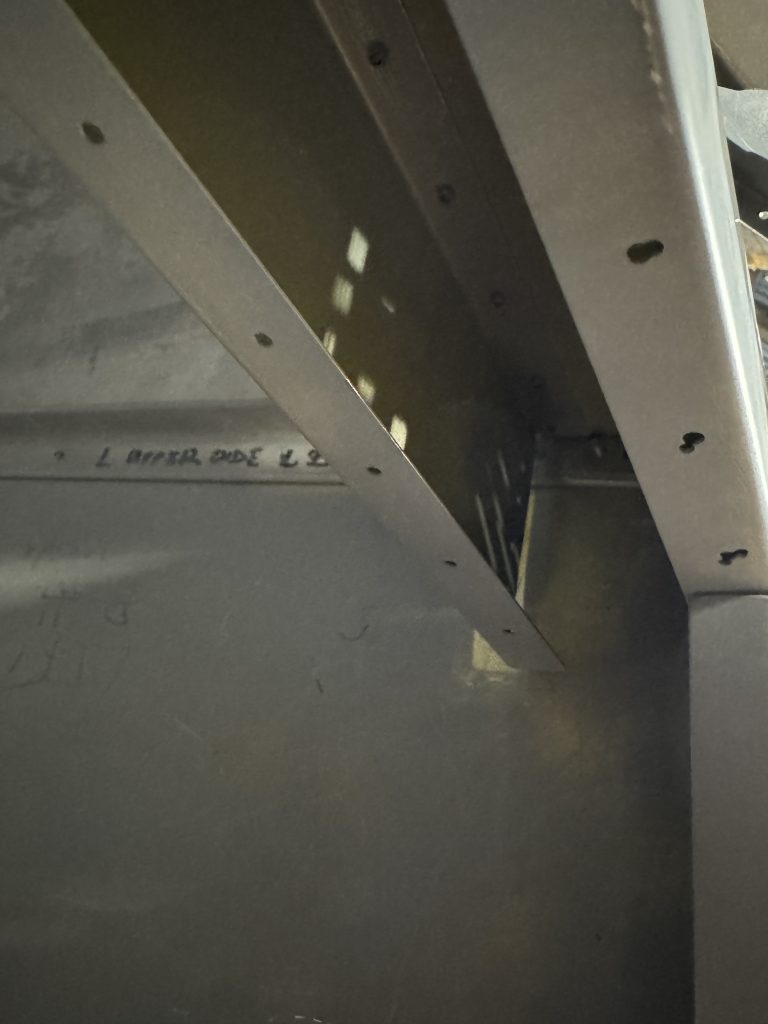
    Much too narrow to drill from the inside to the outside or to get a center-punch in there, or even a sharpie.

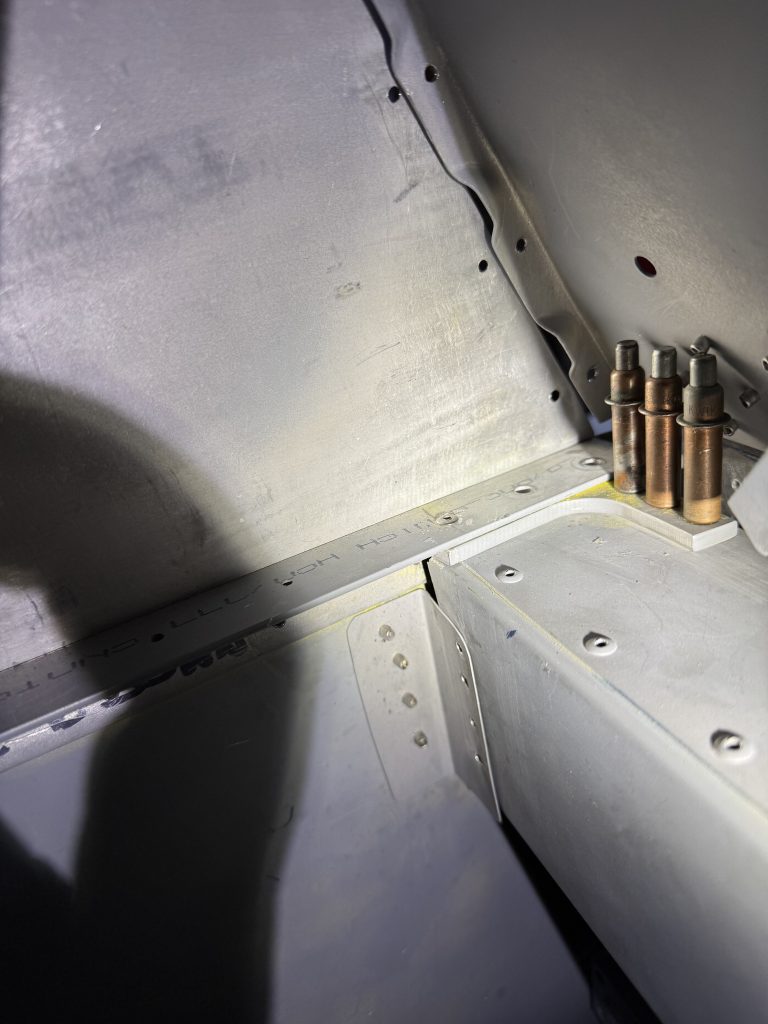
    I ended up using a clip from a failed attempt. I made a template out of it. By shining a light through the rear the holes appeared, and I marked them with a sharpie.
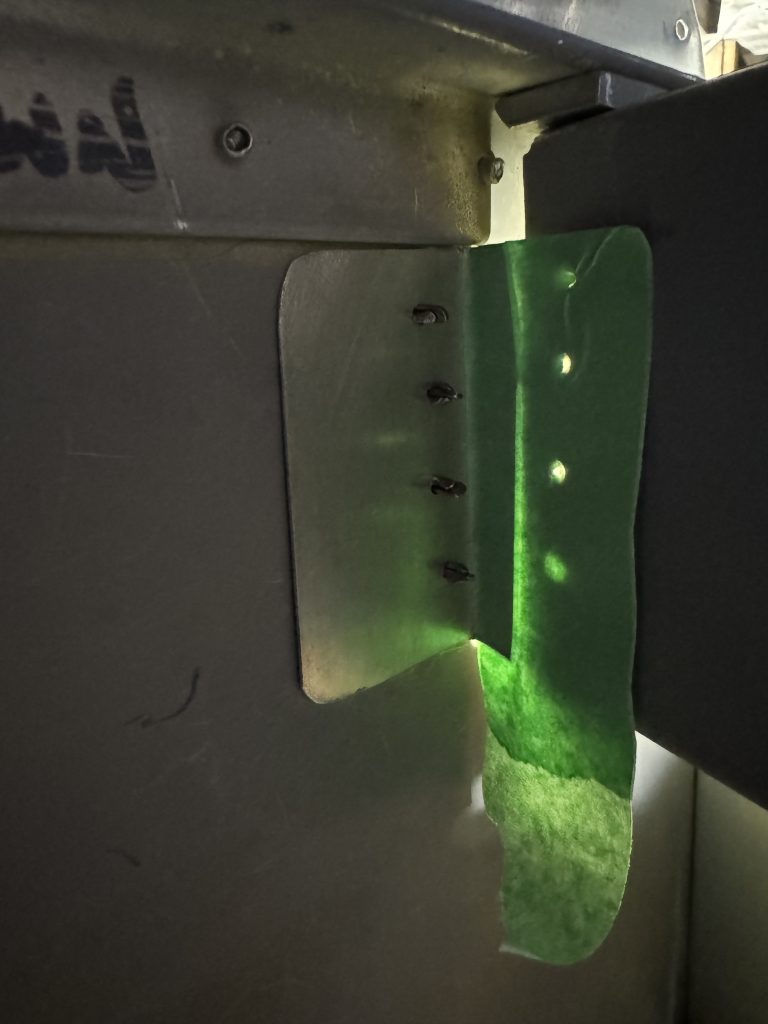
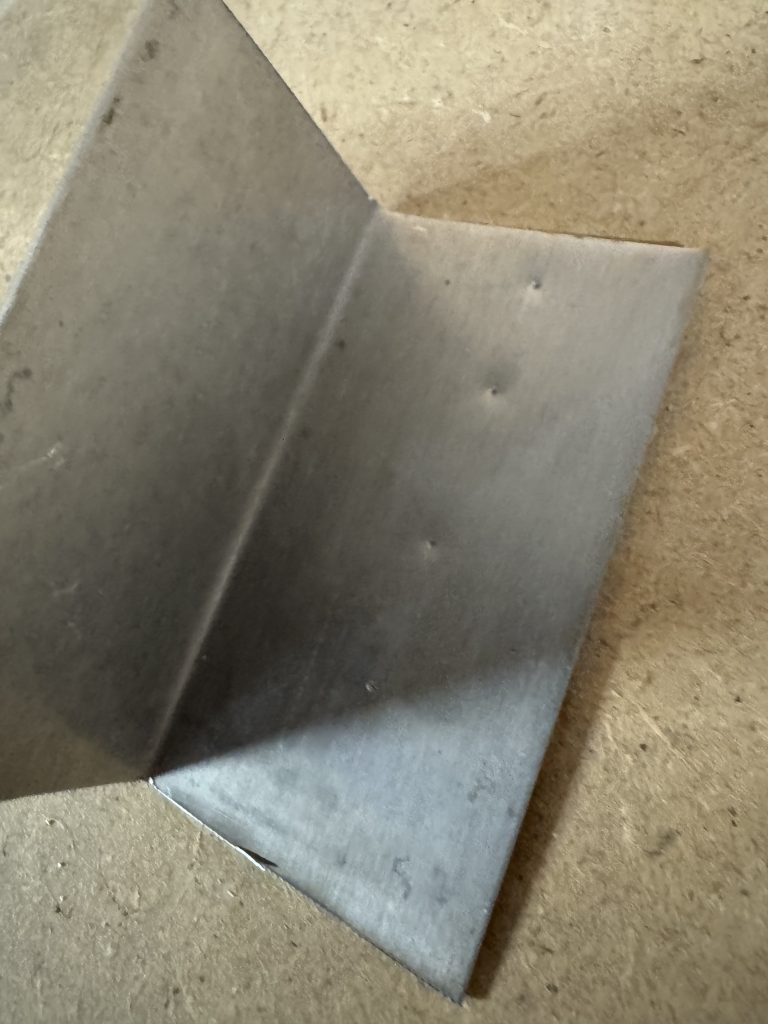
    The template was used to center-punch another clip, with the punch spaced slightly to the inside to offset for the thickness of the metal.

    Success! My new clip fits. Once it is trimmed and finished it can be installed.

    I started giving a thorough and methodical once-over to the remainder of the fuselage. The method is to start at base components and verify if they have been made and if they have been made well.


    I wrote this post back in August and am posting it now as I returned to working full-time and started back at school. I’m hoping to spend some time on the airplane during the winter break and also bring it back into my daily routine next year.

  • Problems

    There are some issues with the fuselage.

    Between the cockpit and the tail cone there is a box strung across the frame. On one side there are two bolts and a rivet that go through, from top to bottom: the upper longeron, a splice plate, the top part of the box, and the rear part of the box. This rivet only goes through the top three components and was mushroomed above the lower-most component. It will have to be removed and replaced.

    According to the plans, this rivet is added rather early on in the assembly process; before the turtledeck is added, and much before the tailcone is joined to the cockpit. There is a fair bit of disassembly to do before the rivet can be removed. It’s surprising that such an obvious error was made. As the box is the only component in the fuselage that has to be inspected during the first pre-close inspection, it will have to be done before proceeding with the build.

    Unfortunately it is not the only error. The cockpit side panels are supposed to be outside of the tailcone side panels. The cockpit side panels are inside of the tailcone side panels, so there is a lip that points into the wind. How or why someone could make this error is beyond me. I will have to separate the cockpit from the tailcone at some point.

    This is not such a bad thing. Committing to regressing a little bit in order to ensure a good quality build is a big mental milestone.

    In the cockpit there are also several mis-rivets and many of the rivets were not assembled according to the plans. Here we see the bottom-most rivet has not been set, and it is also too close to the bottom of the component. It will have to be replaced and another rivet added above it. Above that rivet are two more rivets that have been “snowmanned,” or that have been drilled more than once, making a large hole resembling a snowman. Additional rivets will have to be added, as the holding strength of these rivets will not be the same as correctly drilled rivets.

    At the rear, these rivets have not been drilled according to the plans at all. They are not even identical left and right. The left should be OK, but I will have to add at least two to the right. Why wasn’t this built according to the plans? It’s not hard, and the plans are excellent.

    I still don’t regret buying a kit someone else has worked on, but it sure is hard to find all these obvious errors. How many more will I come across? And, will my tolerance of defects change over time? I will have to be very thorough when going over the rest of the work already done, and carefully analyze the effects of every deviation from the plans.


    I will have to build the seat pan, but the kit did not come with any 0.025″ sheet and my local store did not have any. James did give me a full sheet of 0.032″ and recommended building the seat out of that. The difference will be less than 1 pound and it should be a lot more solid.

    A vixen file is a curved tooth cutting instrument that produces a flat edge by removing lots of metal. The large gaps between teeth and single-direction operation works well for soft metals like aluminum. To make nice flat edges on the control surfaces, I wanted one and could not find one anywhere in Canada. Brown tool has them but I was not ready to place an order from them that justified the shipping cost just yet. Luckily someone on eBay located in Maine was selling new-old-stock vixen files made in England at an attractive price.

    I also got these burrs from Amazon for just $56 and they work great; they are solid and not brazed on, they cut straight and fast and the ground shafts are great quality.


    I was about to complete the rudder assembly, but ran out of 3/32″ clecos. This assembly will be paused as I wait for them to arrive. Someone on Amazon was selling a cleco kit at just about $1 each! At Spruce they are $2!