The kit came with two flaps and two ailerons partially built. They were conveniently set up for the larger sport ailerons, which I wanted to build as they add a fair bit of roll rate. The flaps are mostly done, probably because they are rather simple, though the edges will need to be dressed and there are a few misaligned holes that I will have to massage into place. I also found some spare flap ribs, probably because the kit was purchased to build the normal ailerons. The flaps should be a rather straightforward inspection, finishing, and riveting job.
I did a very thorough and careful inspection, of course, and noticed that the left hand and right hand flaps were mis-labelled. There are so many glowing errors made in this assembly it’s kind of incredible.
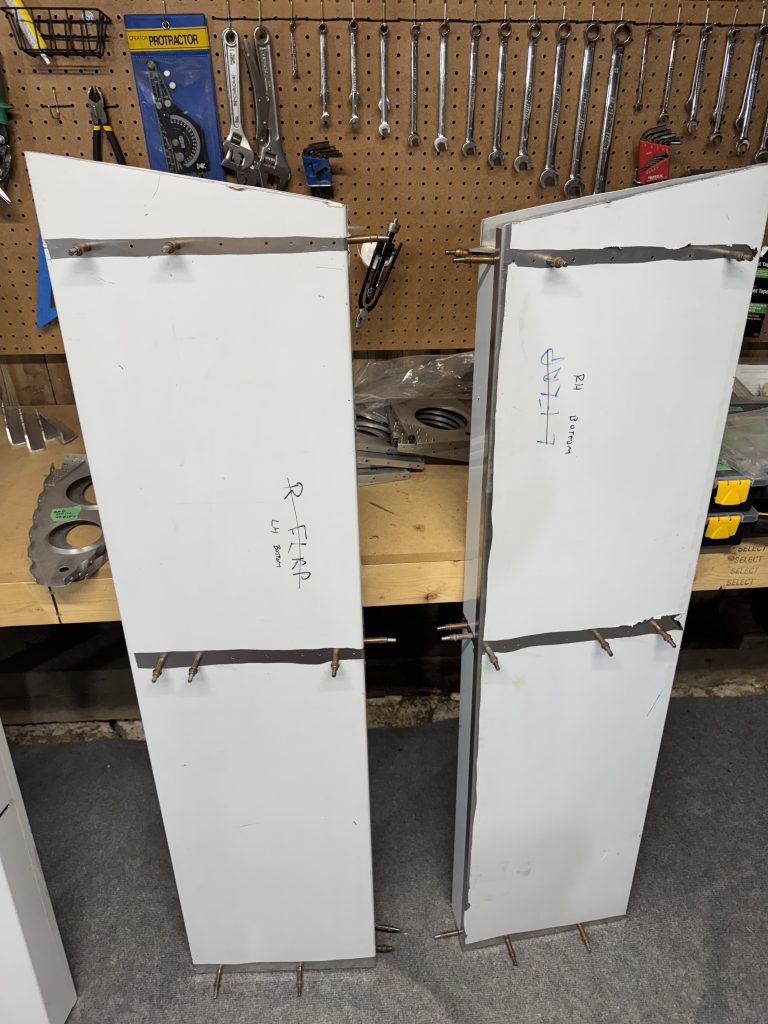
After taking them apart, I will have to replace all of the flap ribs, as several of the rivet holes are too close to the edge. Oh well.
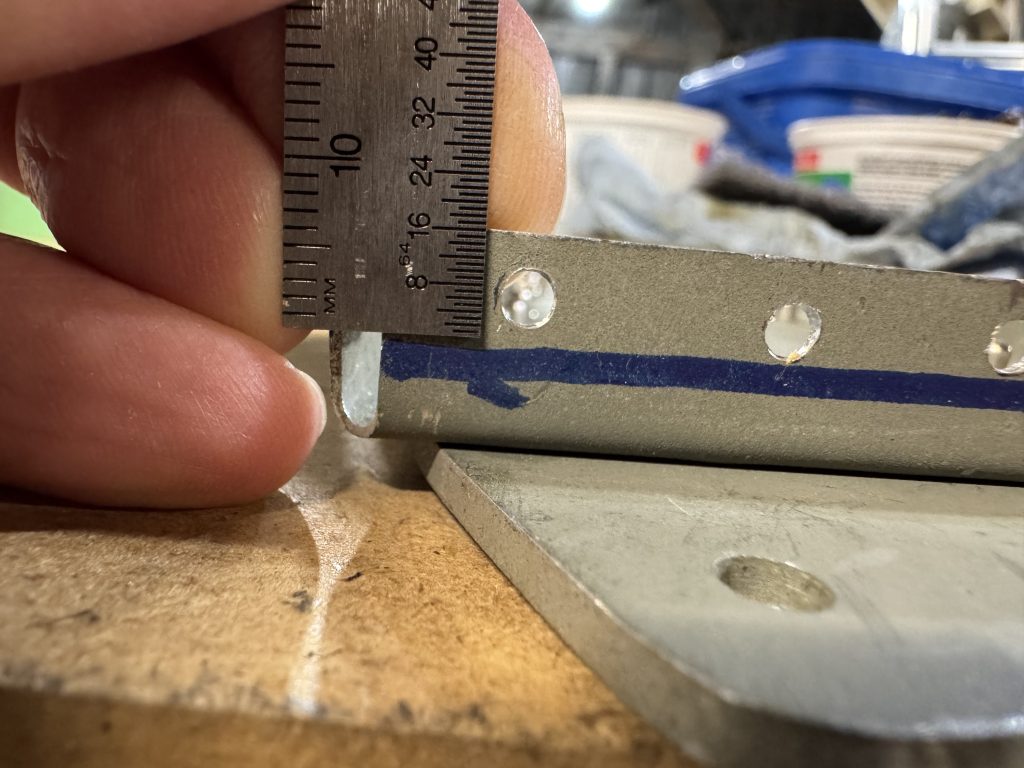
The rule is the center of the hole has to be at least 2 diameters away from the edge, or a 1/8″ rivet (the most common) has to be 1/4″ from the edge. Sonex does not give the builder a lot of margin here as most rivets are 1/4″ from the edge. At the same time, drawing straight lines is pretty easy.
The ailerons are another story. They are built similar to the flaps, except the drive rib is doubled up and there is a counterweight on the outer end, plus a tip rib with some difficult angles. One of the skins had been cut rather well, but the other had its counterweight hole cut almost an inch inboard of where it should be. Another incredibly obvious blunder.
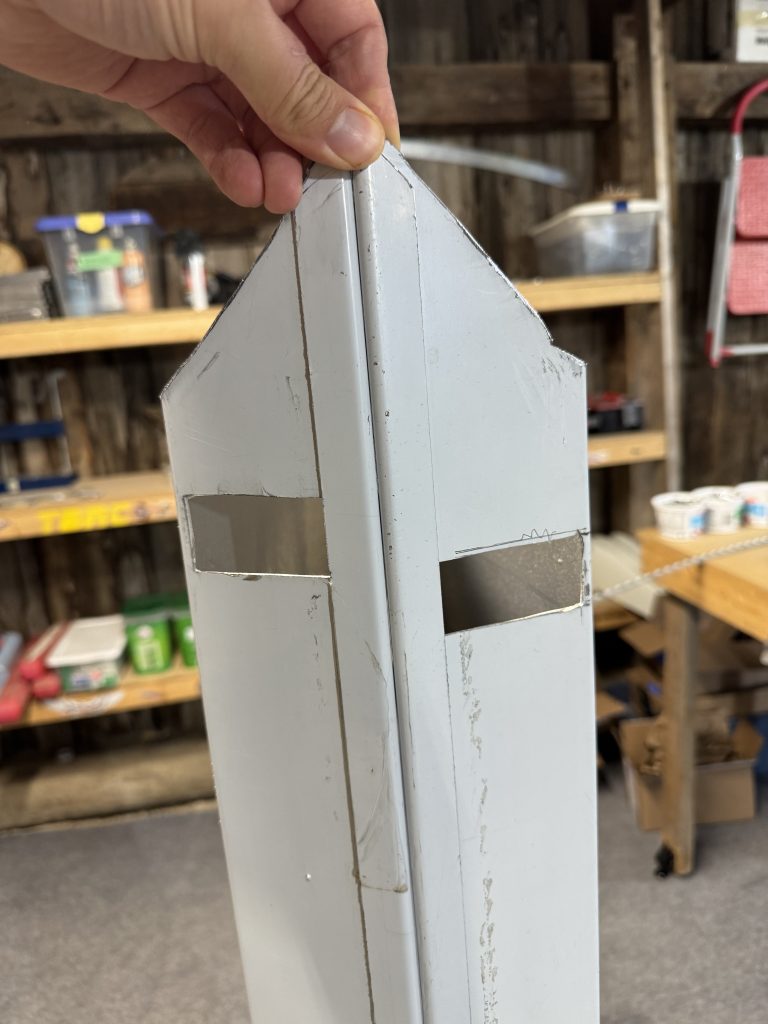
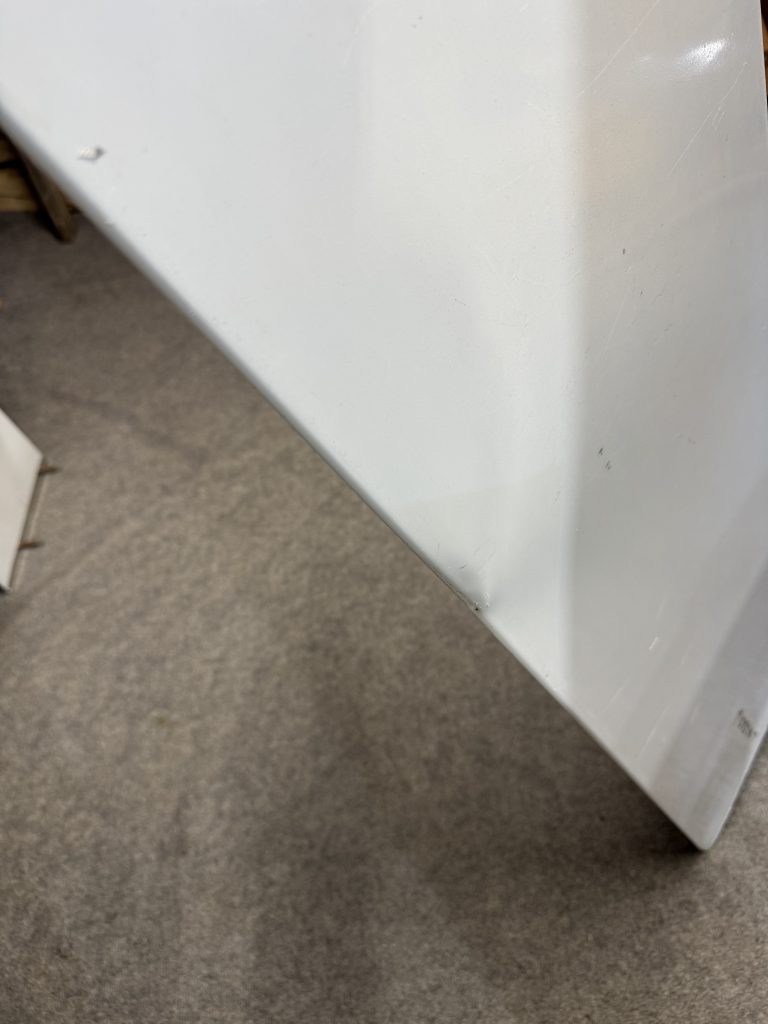
While thinking of ways I could save it, I dropped it on concrete and ruined the trailing edge. The decision of whether to repair or replace was made for me. I will buy another one from Sonex. This is a $200 USD part.
One of the aileron drive horns was assembled completely crooked. I took it apart and the drive plate can be saved, so I will only have to buy or make the ribs.
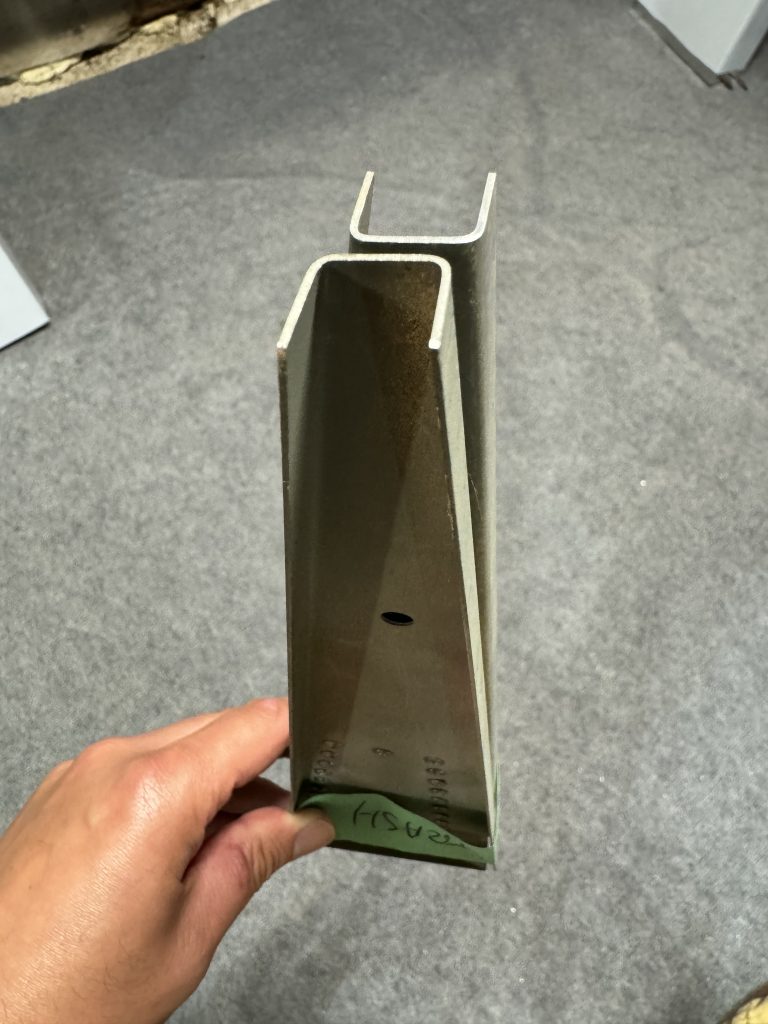
The other aileron drive was straight but the drive horn was slightly off, about 5/64″ at the attachment. I will ask Sonex if I can keep it, after Oshkosh. I’m pretty sure I can as long as I build both drive horns the same.
Both of the counterbalance mounts were put together incorrectly; the connecting clips were assembled in what seems to be a random fashion, and they do not clear the aileron skins. I should be able to save these simply by redoing the clips.
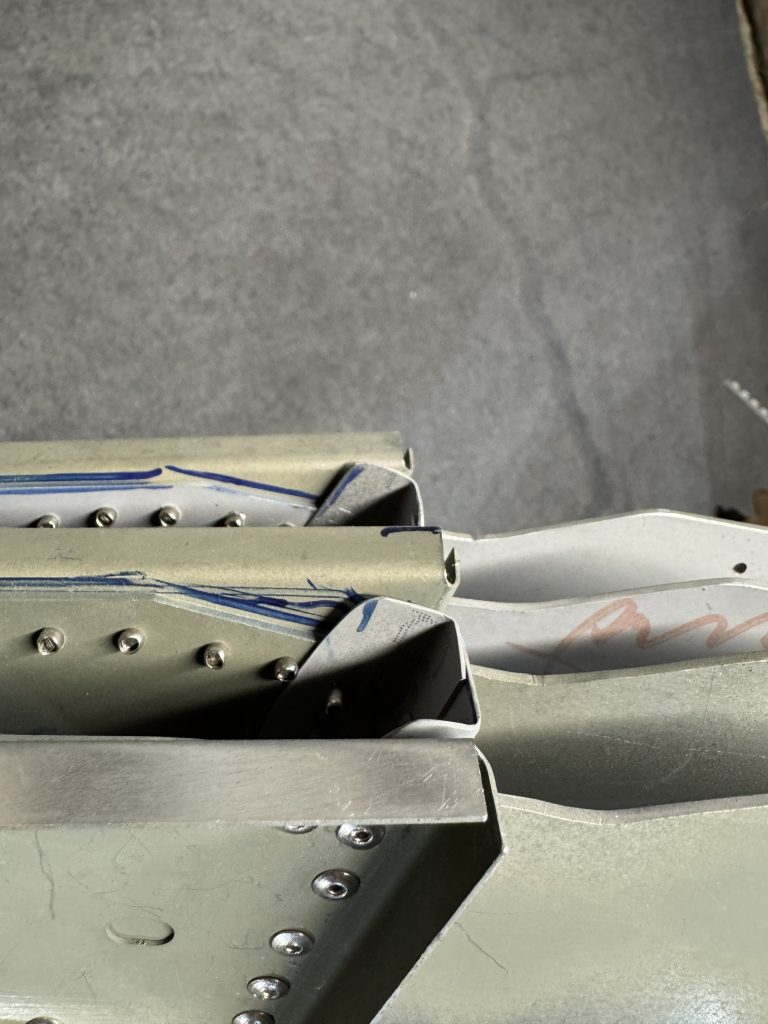
I was wrong again. The mount plates are supposed to be flush to the skin of the aileron and they are spaced well off. All of the ribs will have to be replaced. Since the drill holes on the mounts are also poorly drilled, I will just replace everything.
So I need parts for the ailerons and flaps, and several parts for the wings. I also need a couple of rivets for the elevators though they are mostly complete. The rudder, horizontal stabilizer, and vertical stabilizer are ready for the pre-cover inspection. That means I will be focusing my energy on the fuselage for the next little while.